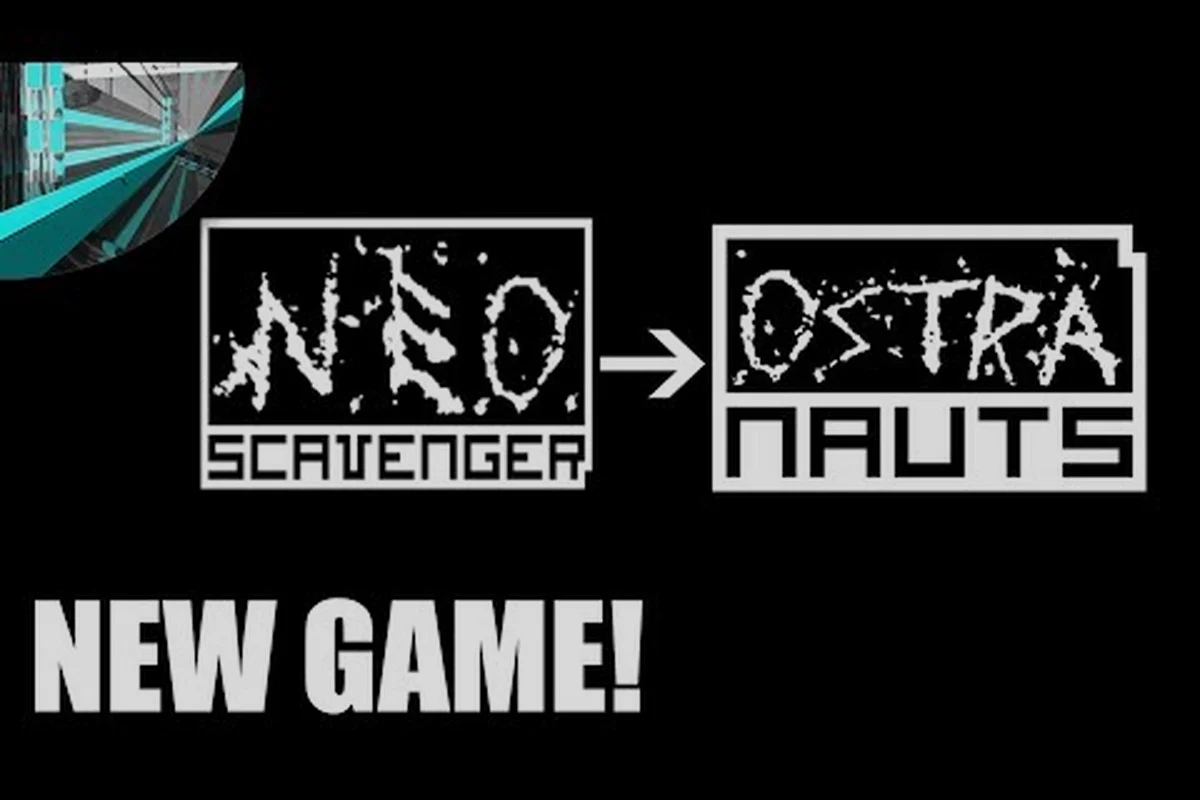
The Ostranauts title meaning is more than a clever label — it telegraphs the entire identity of Blue Bottle Games' noir space-sim in just one word. Built around the suffix "-nauts" (Greek for sailors) and the root "ostra," the name fuses linguistic heritage with the scavenger-driven tone of the NEO Scavenger universe. Understanding that name is the fastest way to grasp what kind of player character you are signing up to become.
Breaking Down the Ostranauts Title Meaning Word by Word
The most efficient way to read the Ostranauts title meaning is to split the word into its two component halves: "Ostra" and "-nauts". Each half carries a distinct semantic load, and together they form a compressed character portrait — a person who scrapes, cuts, and travels the black between worlds.
The "-nauts" Suffix in the Ostranauts Title Meaning
The right half of the word borrows directly from the Greek "nautes" (ναύτης), meaning sailor or seafarer. English has inherited this root through a long chain of compound nouns that all describe travelers of a specific medium:
- Astronaut — star sailor (Greek astron + nautes)
- Cosmonaut — universe sailor (Greek kosmos + nautes)
- Argonaut — sailor of the ship Argo (Greek mythology)
- Aeronaut — air sailor (Greek aer + nautes)
- Ostranaut — sharp, cutting, or oyster-edged sailor
In every case the suffix signals a person who crosses a hostile environment by skill rather than comfort. The Ostranauts title meaning therefore inherits the implication of a journeyman — someone who has earned the right to operate inside a domain that would kill the unprepared.
The "Ostra" Root in the Ostranauts Title Meaning
The left half is murkier, because "ostra" has multiple competing etymologies. Each candidate interpretation reinforces the same thematic message, which is why the developer likely chose the ambiguity deliberately.
| Candidate Root | Language | Literal Sense | Gameplay Resonance |
|---|---|---|---|
| Ostra (oyster, plural) | Latin | Hard-shelled mollusk | Scavengers who pry open derelict hulls for a living |
| Ostra (sharp, acute) | Polish / Slavic | Pointed, cutting | Pilots who fly risky Newtonian trajectories in derelicts |
| Ostrakon (potsherd) | Ancient Greek | Broken pottery shard | A fractured society living among the shards of dead ships |
| Ostara (spring goddess) | Proto-Germanic | Dawn, renewal | A potential new start after a personal collapse |
The Ostranauts title meaning reads cleanly through all four lenses. Whether you translate it as "oyster sailors," "sharp-edge sailors," "shard sailors," or "dawn sailors," the noir setting supports the interpretation — players spawn on K-Leg Station broke and hunted, then carve a future from wreckage.
Why the Double Reading Matters for the Ostranauts Title Meaning
Most sci-fi game titles lean on a single metaphor. The Ostranauts title meaning instead layers two: the suffix speaks to who you are (a traveler), while the root speaks to what you do (pick, pry, scrape). The resulting compression is rare in the genre, and it is exactly what the developer Daniel Fedor — a former BioWare writer — has said he wanted when pitching the game.
The Noir Space-Setting Behind the Ostranauts Title Meaning
The Ostranauts title meaning is not a linguistic accident. Blue Bottle Games has confirmed the project lives in the same universe as NEO Scavenger, the studio's earlier hex-based survival roguelike. That shared canon shapes the etymology: the world is one where civilization has collapsed and the only economy that works is the one built from the bones of old ships.
A Scavenger Class Hidden Inside the Ostranauts Title Meaning
In NEO Scavenger, your character is a survivor who wakes up in a cryopod with nothing but a hospital gown. In Ostranauts, the equivalent is the K-Leg station tutorial that drops you onto a scrapyard full of derelicts. Both openings force the same identity on the player: someone who must harvest value from the discarded.
| Element | NEO Scavenger (2014) | Ostranauts (2020 EA / 2026 1.0) |
|---|---|---|
| Player archetype | Cryo-pod castaway | Scrapyard castaway |
| Defining verb | Scavenge | Scavenge, salvage, fly |
| Core economy | Loot hexes, trade with factions | Strip ships, pay off a ship loan |
| Tone | Post-nuclear survival | Noir space survival |
| Camera | Top-down hex grid | Side-scrolling Newtonian flight |
The continuity between the two games is the cleanest evidence that the Ostranauts title meaning is not "explorer" in the heroic sense. The Ostranauts are scavengers first, travelers second — and the name is engineered to remind you of that on every loading screen.
How the Setting Reinforces the Ostranauts Title Meaning
K-Leg Station orbits in a debris belt littered with dead hulls. When you accept your first contract from the Ostranauts Steam store page, the tutorial mission is to board a wreck and pull out every sellable component. That literal act of scraping inside a dead shell is the lived experience of the Ostranauts title meaning: the oyster-sailors prying open frozen ships for the pearls inside.
Comparing the Ostranauts Title Meaning to Other Naut-Suffix Games
A useful way to test the Ostranauts title meaning is to line it up against other naut-suffix titles in sci-fi and compare how each one frames its player. The pattern that emerges shows how unusual Ostranauts' root choice really is.
| Title | Suffix Reading | Root Origin | Implied Player Identity |
|---|---|---|---|
| Ostranauts | Sharp / shard sailors | Slavic + Greek | Scrap-economy scavenger-pilot |
| Astronaut | Star sailors | Greek astron | Heroic explorer |
| Cosmonaut | Universe sailors | Greek kosmos | State-sponsored explorer |
| Argonauts (myth) | Argo sailors | Greek myth | Heroic questers |
| Selenauts (rare) | Moon sailors | Greek selene | Lunar colonists |
| Taikonaut | Space sailors | Chinese taikong | National program explorer |
| Oceanaut | Ocean sailors | Greek okeanos | Deep-sea explorer |
Notice the gap. Most naut-titles celebrate expansion: a positive, optimistic verb. The Ostranauts title meaning is one of the few in the table that leans negative — it does not promise discovery, it promises endurance through wreckage. If you want to see how that identity actually plays out in practice, the getting started walkthrough breaks down the first few hours of scraping ships on K-Leg.
Linguistic and Cultural Echoes in the Ostranauts Title Meaning
Because the Ostranauts title meaning has so many plausible readings, it borrows cultural weight from several traditions at once. Pinpointing the strongest echoes helps new players place the game inside a wider storytelling lineage.
Slavic "Ostra" Echoes in the Ostranauts Title Meaning
In Polish and several Slavic languages, ostra / ostry translates to "sharp," "hot" (in the chili-pepper sense), or "intense." That semantic cluster lines up perfectly with the Newtonian flight model that lets pilots thread debris fields at dangerous speeds. When the developers talk about the game being a "hardcore space-sim," the Ostranauts title meaning is doing quiet translation work — ostra is literally where the word "hardcore" lives.
Latin "Ostra" Echoes in the Ostranauts Title Meaning
In Latin, ostra is the nominative plural of ostrum (oyster). Oysters are filter-feeders that live on the edges of where the sea meets something harder. The metaphor is almost too clean: an Ostranaut is a filter-feeder who lives at the boundary between safe station air and the vacuum outside, pulling nutrients (salvage) out of a hostile medium.
Greek "Ostrakon" Echoes in the Ostranauts Title Meaning
The Greek ostrakon is a broken piece of pottery, famously used in ancient Athens as a voting token (the origin of ostracize). The image is of a fractured society casting broken pieces to decide who is exiled — a perfect mirror for the game's faction politics, where every corporation, union, and mercenary band is one broken vote away from being cast out of the economy.
How the Ostranauts Title Meaning Shapes Player Identity and Gameplay
A title is only as good as the gameplay loop it predicts. The Ostranauts title meaning earns its keep because every verb it implies is something the player actually has to do — often under pressure, often without a safety net.
Scavenge, Pry, Strip — Verbs Inside the Ostranauts Title Meaning
If you treat the name as a verb stem, three actions fall out of it:
- Scavenge — pull useful components from derelict hulls using the grid-based salvage interface
- Pry — cut into sealed compartments with a cutting tool, risking hull breach for higher-value loot
- Strip — disassemble whole rooms out of a wreck and refit them into your own ship using the modular construction system
Each of those verbs is a literal in-game activity. According to community testing on the official Ostranauts wiki, new players typically spend the first 5–8 in-game days cycling through those three verbs before they make their first credit-positive trade. The title is a literal job description.
Crew Management as Ostranauts Title Meaning in Practice
The "nauts" half is not passive either. NPCs in your crew have physiological and emotional needs that you must manage in real time with pause. Hiring, feeding, paying, and protecting your crew is the operational meaning of the suffix — without crew, the ship does not fly, the salvage does not get processed, and the loan does not get paid. The Ostranauts title meaning therefore also encodes a promise: you are not alone, and your people will break if you ignore them.
A Practical Reading of the Ostranauts Title Meaning for New Players
For a brand-new captain rolling credits on K-Leg, the Ostranauts title meaning should function as a three-line job contract:
- Who you are: a sharp-edged sailor scraping the inside of dead ships for a living
- What you do: scavenge, pry, strip, refit, fly, hire, pay off
- What you avoid: pretending you are a heroic astronaut — the universe is not interested in your legend
If you internalize that contract before character creation, the early-game decisions in the starter guide stop feeling punishing and start feeling like the natural rhythm of an Ostranaut's working day.
Frequently Asked Questions
What does the word Ostranauts actually mean?
The Ostranauts title meaning combines the Slavic/Latin root ostra (sharp or oyster) with the Greek suffix -nauts (sailors). The compact translation is "sharp-edge sailors" or "oyster sailors" — a scavenger who scrapes a living off the debris field of a broken solar system.
Is the Ostranauts title meaning connected to NEO Scavenger?
Yes. Both games share the same universe, and the scavenger identity is identical in both. The Ostranauts title meaning is essentially a noir-sci-fi retelling of the cryo-castaway premise from NEO Scavenger, but with Newtonian flight and crew-management systems layered on top.
Why did the developer pick "Ostranauts" instead of "Astronauts" or "Cosmonauts"?
Because the studio wanted a name that signaled survival and salvage rather than heroic exploration. The Ostranauts title meaning leans negative on purpose — these are people working the edges of a failed economy, not the polished ambassadors of a working one.
Does the Ostranauts title meaning affect gameplay or is it just flavor?
It affects gameplay as a design intent, not as a literal rule. Every core verb — salvage, strip, hire crew, repay loan — is implied by the name. If you play the game as if you were an astronaut, you will struggle; if you play it as an Ostranaut, the systems click into place.
Where can I learn the basic controls once I understand the Ostranauts title meaning?
The first steps guide walks through K-Leg station, your first ship loan, and your first salvage run, which is the cleanest way to translate the title's job description into muscle memory.
If the Ostranauts title meaning has pulled you in, drop into K-Leg, accept that you are an oyster-sailor prying open a dead universe, and let the scrap economy decide what kind of captain you are. Which interpretation of the name — sharp, oyster, shard, or dawn — fits the captain you want to be?