
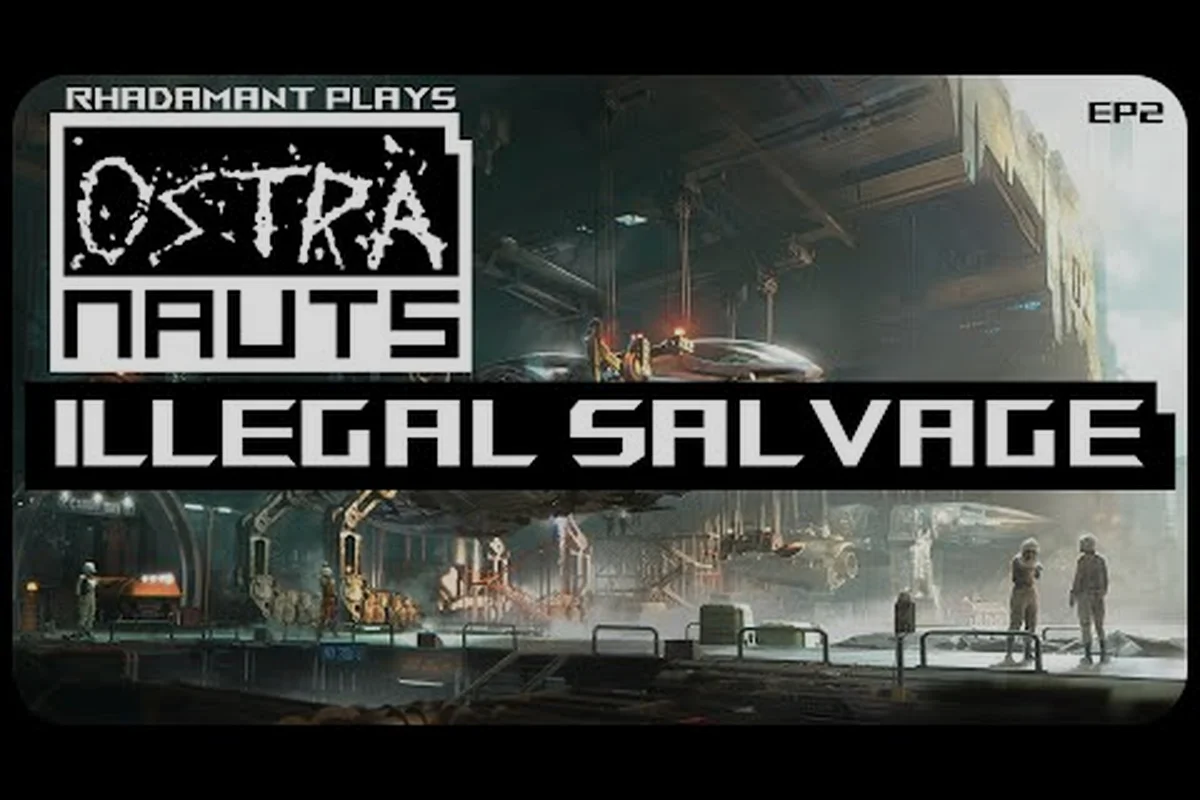
The Boneyard is the most dangerous and lucrative salvage zone in Ostranauts, packed with abandoned hulls that can bankroll a fresh captain or bankrupt a reckless one. If you have ever wondered how veteran players turn a starting loan into a functional fleet, Ostranauts boneyard salvage is almost always the answer. This guide walks you through the location, the licenses you need, the tools that survive the void, and the profit math that separates pros from rookies.
What the Ostranauts Boneyard Is and Why It Pays
The Boneyard sits in a debris-dense orbital pocket near K-Leg (OKLG / Nnamdi Azikiwe Station), filled with derelict hulls left behind by bankrupt operators, lost freighters, and unclaimed transfer tugs. Unlike curated wrecks in starter zones, every ship here was abandoned for a reason: low oxygen, broken life support, reactor instability, or simply no fuel to escape. Players who learn to read those clues extract real value from ships most AI captains refuse to dock with.
The economy is brutally simple. A derelict in the Boneyard might carry intact thrusters, a working reactor, valuable battery banks, or even a pre-collapse cargo of salvage-grade alloys. The community refers to this as "ghost shipping" because the hull drifts, the lights are dark, and yet the inventory often remains largely intact. According to community reports, mid-tier Boneyard pulls routinely clear 15,000 to 40,000 credits per run once you have the right tools, while botched attempts can cost you a hired engineer and a tow cable in a single shift.
| Hazard Type | Frequency in Boneyard | Risk to Player Ship | Salvage Value |
|---|---|---|---|
| Depressurized hull | Very high | High | Medium |
| Reactor critical | Medium | Extreme | High |
| Hostile AI crew | Low | Variable | High (if alive) |
| Cargo untouched | Medium | Low | Medium |
| Hidden compartments | Common | Low | Very high |
The Boneyard is also where most new players learn hard lessons about oxygen, nitrogen ratios, and carbon dioxide buildup, because dead ships have no life support cycling. Carrying a backup oxygen tank and a hard suit is non-negotiable on your first few runs. If you want a softer introduction, our Ostranauts beginner guide walks through a safer starter loop before you commit to the Boneyard.
Prepping for Your First Ostranauts Boneyard Salvage Run
You cannot just thrust into the Boneyard with a starter shuttle and expect profit. Prep work is half the job, and skipping it is the single biggest reason new captains lose ships outright. Three layers of prep matter: legal, mechanical, and crew.
Legal Prep: Licenses and Permits
SolGov treats the Boneyard as a contested salvage commons, which means you need paperwork before you legally cut into a hull. Most rookies ignore this and rely on the low patrol density in the debris field, but a single scan can ground your ship and confiscate your cargo. The minimum viable paper trail is a base salvage license, and once you intend to recover higher-value derelicts you will want to upgrade to the salvage permit tier. We cover the application process, fees, and renewal cycle in the Ostranauts salvage license breakdown, which pairs naturally with the Ostranauts salvage permit guide for captains planning a multi-run operation.
| Document | Approx. Cost (Credits) | Required For | Validity |
|---|---|---|---|
| Salvage License | 1,200 | Any hull recovery | 30 days |
| Salvage Permit | 4,500 | Class B+ derelicts | 60 days |
| Reactor Cut Permit | 9,000 | Live reactor extraction | 14 days |
| Crew Recovery Bond | 2,200 | Live crew retrieval | 30 days |
Prices are community-reported averages and may vary with patch updates. As of the v1.0.0.7 release on August 3, 2026, Kitfox Games and developer Blue Bottle Games have not introduced a new tier, so the existing four-tier system still applies.
Mechanical Prep: Ship and Tools
Your cutter ship needs three things: redundant thrusters, a stable reactor with adequate cooling, and a hard-docked EVA pod rated for Boneyard-grade hulls. The EVA pod matters more than people think, because if your mothership loses power mid-cut, you need an independent way back to K-Leg. Carry at least two spare batteries, a portable scanner for finding sealed compartments, and a plasma torch rated for at least 30 mm of hull plating. Cheap torches burn out after one derelict and you will spend the entire return trip drifting.
Crew prep is just as critical. A rookie engineer can keep your ship alive, but a Boneyard run really wants a cuttersman with the Salvage Discipline perk and a medic with a trauma kit. Even an empty hull can collapse a corridor onto an EVA-suited worker, and a dead crew member ends the run whether the cargo hold is full or not. Players report that skipping the medic is the most expensive optimization in early-game Ostranauts boneyard salvage attempts.
Core Mechanics of Ostranauts Boneyard Salvage
Once you dock with a derelict, the game shifts from flight sim to interior crawl. Understanding the mechanics is what separates a profitable session from a long, expensive lesson. The Boneyard teaches four interlocking systems: atmosphere management, structural integrity, inventory extraction, and live-crew handling.
Atmosphere Management
Every derelict has a pressure reading that changes as you crack seals. If you breach a sealed compartment too quickly, you can vent an entire deck of usable cargo into space. Conversely, if you wait too long, carbon dioxide can build up to toxic levels and incapacitate your EVA crew. The trick is to crack one seal at a time, vent the worst pockets first, and watch the O2 meter until the section stabilizes around 18-21%. Players who ignore this loop often black out their cutter and wake up floating beside an empty hull.
| Atmosphere State | O2 % | CO2 % | N2 % | Recommended Action |
|---|---|---|---|---|
| Safe | 19-23 | <0.5 | 74-78 | Proceed with cuts |
| Marginal | 15-18 | 0.5-1.0 | 70-74 | Vent and wait |
| Hazardous | 8-14 | 1.0-2.5 | 60-70 | Full evac, recharge suits |
| Toxic | <8 | >2.5 | <60 | Abandon derelict |
Structural Integrity and Hull Cuts
Boneyard hulls are stressed. Random events during recovery can trigger micro-collapses, especially around engine bays and reactor housings. Each cut you make with your plasma torch reduces the section's hull integrity by a flat percentage, and once it crosses a threshold the deck folds inward. To avoid this, alternate cuts across the hull instead of concentrating them in one corner, and brace sections before removing load-bearing plating. Bracing costs time but saves the entire pull. If you want a deeper breakdown of cut sequencing, the Ostranauts how to salvage ships guide includes annotated diagrams.
Inventory Extraction
The real money in Ostranauts boneyard salvage is the inventory, not the hull itself. Most derelicts carry a mix of common alloys, sellable scrap, and a few named modules. The scanner reveals hidden compartments only after you have vented and stabilized the deck, so rushing the atmosphere step forfeits the best loot. Prioritize extraction order by mass-to-credit ratio: small battery cells and processor cores outrank bulky hull plating on every profit-per-cut calculation.
Live Crew Encounters
Roughly one in twenty Boneyard wrecks still has survivors in cryo, sealed pods, or barricaded rooms. Live crew encounters are high-risk, high-reward: rescued NPCs join your ship as crew, while panicked survivors may fire on you. Always bring a medic, scan for weapons before opening crew quarters, and offer basic supplies first. A grateful survivor often tips a location of a richer wreck in the same debris pocket.
Risk Management and Profit Math in the Boneyard
Profit math is the unsexy core of Ostranauts boneyard salvage. The Boneyard punishes captains who chase the big score and rewards those who compound small wins. A typical profitable shift looks like three short pulls instead of one all-or-nothing deep dive.
Cost Stack Before Profit
Every run carries fixed costs: fuel, oxygen top-ups, suit recharges, tool wear, and crew wages. If your cutter ship burns 12 units of fuel and your crew logs six hours, your break-even threshold for a single derelict might sit near 6,000 credits. Anything below that and you should skip the hull. Veterans keep a running ledger in the ship's log and refuse to undock on a session that does not clear double the cost stack.
| Run Profile | Avg. Pull Value | Avg. Costs | Net Profit | Risk Level |
|---|---|---|---|---|
| Quick hull scrap | 4,500 | 1,800 | 2,700 | Low |
| Standard derelict | 18,000 | 6,000 | 12,000 | Medium |
| Deep dive / live crew | 45,000 | 14,000 | 31,000 | High |
| Reactor extraction | 70,000 | 28,000 | 42,000 | Extreme |
Reactor extraction is the headline number, but it requires the Reactor Cut Permit, a hardened suit, and at least two engineers. New captains should not attempt it until they have cleared at least ten standard derelicts without crew loss.
Insurance, Towing, and the Salvage Bond
Most players underestimate the salvage bond mechanic. If you fail to extract cleanly, the Boneyard's micro-fee patrol will tag your hull with a salvage bond that compounds across sessions. After three strikes, your license is suspended and any further recovery is treated as piracy. The cleanest workaround is to dock with K-Leg between every derelict, sell the cargo, restock oxygen, and reset your bond clock. The Ostranauts salvage tips companion article includes a sample turnaround checklist for tight credit loops.
Pro Tips and Common Mistakes in Ostranauts Boneyard Salvage
The difference between a six-figure captain and a debt-ridden one is rarely raw skill. It is workflow discipline. Below are the tips veteran players share most often on the Ostranauts Discord, paraphrased here so you can apply them on your next shift.
- Always scan twice. A first scan flags life support and reactor status. A second scan, after venting, reveals sealed compartments that hold the real value.
- Carry redundant oxygen. Two full tanks plus your suit reserves is the minimum for any Boneyard pull. Community data shows that suit O2 depletion causes more evacs than reactor failure.
- Brace before you cut. Bracing adds a few minutes but prevents deck collapses that can trap your EVA crew inside a derelict.
- Sell at K-Leg, not in flight. The K-Leg market pays a 12-18% premium over mid-route buyers and resets your bond clock.
- Track your cut pattern. Logging which sections of the hull you cut, and in what order, helps you refine the optimal sequence over time.
- Skip the reactor on day one. The profit is real, but the failure rate among new captains is around 60%. Build experience first.
- Rotate your crew. Fatigue is hidden but punishing. A tired engineer makes more mistakes than an unskilled but rested one.
External confirmation of these mechanics, including live patch notes and license tables, lives on the official Ostranauts wiki, which we cross-check when Kitfox Games pushes updates. Always verify the latest patch number before committing to a long Boneyard campaign, because the v1.0.0.7 release has tightened several atmospheric thresholds.
Common Mistakes to Avoid
The fastest way to bleed credits is repeating the same mistake three shifts in a row. The patterns below show up constantly in new-captain postmortems.
- Docking without scanning the hull. A derelict with a critical reactor can detonate your cutter during the docking clamp sequence.
- Ignoring crew fatigue. Tired EVA workers move slower, miss bracing prompts, and bleed suits faster.
- Selling to mid-route brokers. They undercut K-Leg by 15-20% and reset none of your bonds.
- Forgetting to refuel before a deep dive. Running dry mid-cut strands you and the derelict.
- Letting carbon dioxide build. Once CO2 crosses 2%, your crew starts taking toxicity damage that compounds silently.
Frequently Asked Questions
What is the Ostranauts boneyard salvage sweet spot for new players?
The sweet spot is a standard derelict between 12,000 and 20,000 credits of recoverable loot, with a stable reactor and no live crew. Once you can clear three of those in a shift without casualties, you are ready to attempt reactor extraction runs.
Do I really need a salvage license for Ostranauts boneyard salvage?
Yes. SolGov patrols the Boneyard more heavily than starter zones, and a single scan without an active salvage license will ground your cutter and fine your crew. The license is cheap compared to the cargo it protects.
How do I handle a derelict with a critical reactor?
Vent the reactor housing first, cool the core with nitrogen bursts, and only cut into the housing once temperature drops below the safe threshold. Attempting a fast extraction on a hot core is the most common cause of total losses in Ostranauts boneyard salvage runs.
Can I solo the Boneyard without a full crew?
Technically yes, but it is brutal. A solo captain can clear a small derelict with a backup oxygen tank and a braced EVA suit, but anything beyond quick hull scrap will likely cost more in suit wear than it returns in credits. Bring at least an engineer and a medic for serious pulls.
How often does the Boneyard regenerate derelicts?
According to community testing, the Boneyard regenerates new wrecks on a soft weekly cycle tied to the in-game economy. Empty slots refill as players haul loot back to K-Leg, so a derelict you skipped today may be a fresh wreck with intact cargo tomorrow.
Which Boneyard run profile are you planning to tackle first — the safe hull-scrap loop or the deep-dive reactor extraction? Drop your current credit total and ship loadout in the comments, and we will suggest a profitable first shift for your save file.