Derelict exploration in Ostranauts is where the early-game grind actually turns into profit, because every drifting hull you board is a self-contained loot box floating against the black. Salvagers who treat wrecks like a checklist of rooms walk away with broken fittings; the ones who read atmospherics, map breaches, and manage their crew come back with rare modules that pay off a serious chunk of the loan. This guide breaks down how to approach, board, and survive the silent ships you find during Ostranauts derelict exploration runs.
Getting Started With Ostranauts Derelict Exploration
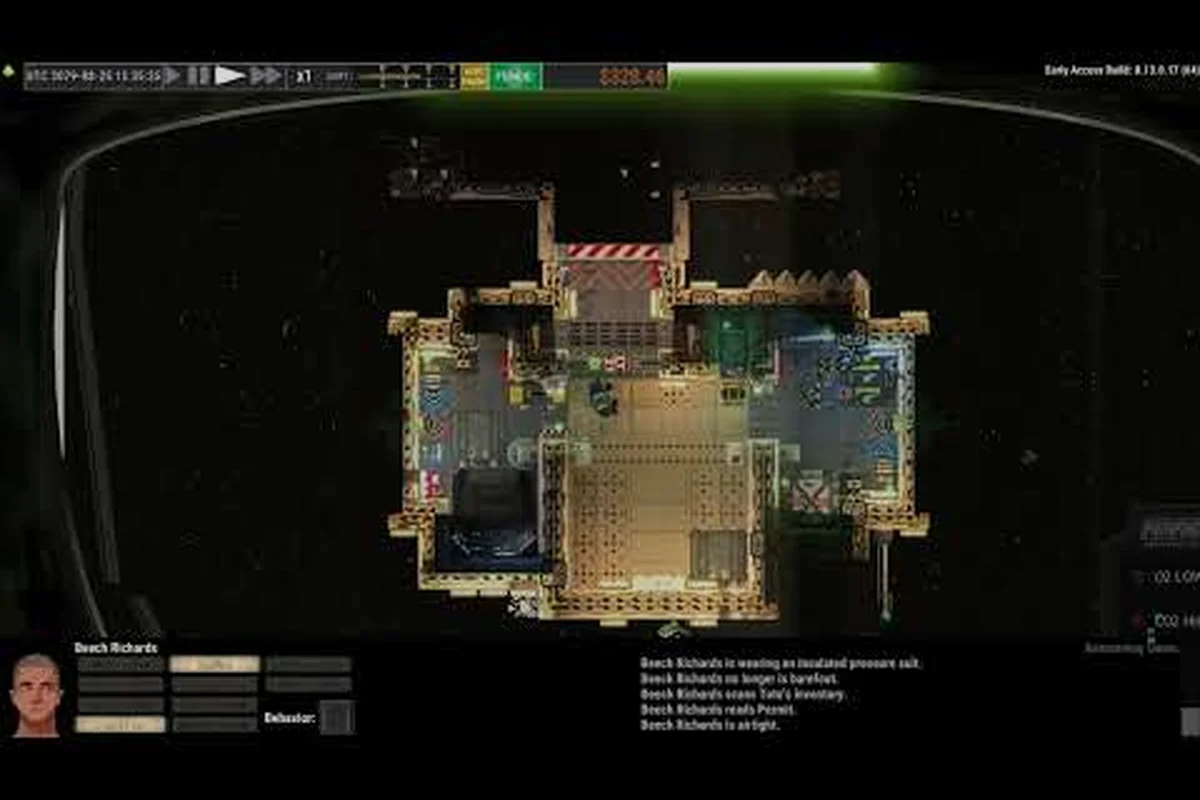
Before you swing your prow toward a drifting wreck, it helps to know what counts as a derelict in this universe and why the system rewards cautious boarding over reckless rushing. Blue Bottle Games' hardcore space-sim layers Newtonian flight, real-time-with-pause crew management, and full interior grids on top of every salvage target, so a wreck is never just a "press E to loot" container.
What Counts as a Derelict?
In Ostranauts, a derelict is any ship that has been abandoned, disabled, or lost contact with traffic control long enough that the universe has stopped caring who claims it. Most appear as drifting icons on your navigational display after you leave the safe corridor around K-Leg Station. They range from tiny one-crew shuttles that died during a bad burn to multi-deck cargo haulers that lost life support decades ago.
The community generally classifies derelicts into three loose tiers based on origin and age:
- K-Leg discards — recent, lightly damaged hulls often still holding sealed cargo and sometimes live crew who mutinied.
- Old system haulers — older vessels with stripped interiors but heavy structural plating, perfect for module harvesting.
- Ghost hulls — long-dead ships deeper in the lanes that may contain experimental parts, but require more fuel and oxygen to reach.
Why Exploration Is the Core Economic Loop
New pilots often think trading or contract work will fund their loan repayment, but experienced scavengers told us the real economy runs on derelict exploration. Wrecks pay out in ship parts, atmospheric processors, and unique items that you simply cannot buy at any station market. Many of the upgrades that transform a starter hull into a sustainable salvager — reinforced bulkheads, larger oxygen recyclers, expanded grid mounts — are pulled out of other people's mistakes.
If you're brand new to the controls, our starter guide covers the basics of launching safely from K-Leg, and once you're comfortable flying, the first-steps walkthrough shows you how to set up a starter loadout that handles boarding runs without falling apart.
Core Mechanics of Boarding a Derelict Ship
Once a wreck is on your scope, the actual process of getting inside is more involved than it looks. Ostranauts derelict exploration simulates hull integrity, internal atmosphere, power bus distribution, and door interlocks, so each boarding is a small puzzle layered on top of a salvage run.
Approach and Docking Procedure
Approach slow, match rotation, and stop within grapple range. The Newtonian flight model means that an over-aggressive burn will slide you past the wreck or, worse, punch a new hole in its hull. Players who ignore rotation find their boarding tubes clamped onto a spinning hull section, which prevents the airlock seal from forming and dumps your crew into vacuum.
Before you commit, scan the derelict's exterior markers for:
- Breach lights — sections venting atmosphere that you should avoid cutting into.
- Heat signatures — a hull that still has power means doors, traps, or even an occupant may still be active.
- Cargo seals — sealed bays are often the highest-yield rooms because they weren't exposed to vacuum.
Atmosphere, Breaches, and Internal Hazards
Once inside, treat every door as a pressure event. Most derelicts will have at least one section that has decompressed, and breaching the wrong bulkhead can vent your suit's oxygen or weld a door shut for the rest of the run. Community reports suggest carrying at least two spare oxygen canisters per crew member on the first run into an unknown wreck, since you cannot tell from the outside how many chambers still hold breath.
Here is a quick reference table for the most common interior hazards you'll meet:
| Hazard | Symptom | Mitigation |
|---|---|---|
| Atmosphere breach | Hissing walls, dropping O2 | Cut power to the breached section first, then seal |
| Live power conduit | Sparks, shock damage | Trip the breaker at the nearest junction box |
| Hostile NPC | Triggered ambush on door open | Carry a sidearm; isolate one room at a time |
| Hull collapse | Structural creaking, falling debris | Move crew out within 30 in-game seconds |
Loot Tables and What You'll Actually Find
Not every derelict is worth your fuel. After a few dozen runs, most pilots develop an instinct for spotting profitable wrecks at a distance, and that instinct is built on recognizing the loot tiers that the game quietly hides behind each hull class.
High-Value Salvage Categories
Three categories consistently outperform everything else you can pull from a wreck, and they form the backbone of any serious Ostranauts derelict exploration haul:
- Atmospheric processors — heavy, valuable, and absolutely required for any ship planning long-range runs outside K-Leg's bubble.
- Grid-mounted modules — weapons, sensors, and engine upgrades that you can swap directly onto your own hull if the mount size matches.
- Data cores — small but high-value items that sell well at most station markets and can also unlock encrypted logs for lore and faction reputation.
Low-Yield vs. Premium Wrecks
The cheapest wrecks to reach are usually the lowest-yield. A freshly-discarded K-Leg shuttle might give you a handful of consumables and a single rusty bulkhead. A premium wreck — often found further out and harder to reach — can net you a full set of reinforced plating and enough oxygen recyclers to refit an entire starter ship.
| Wreck Class | Average Fuel Cost | Average Yield (Credits) | Risk Level |
|---|---|---|---|
| K-Leg shuttle | Low | 1,500–3,000 | Low |
| Old hauler | Medium | 4,000–8,000 | Medium |
| Ghost hull | High | 10,000+ | High |
Treat fuel cost as your real entry fee, because a ghost hull that "looks" profitable becomes a loss if you burn through half a tank to reach it. Bring a scanner upgrade if you plan to chase the high-yield tier regularly.
Risks, Crew Management, and Survival Tactics
Boarding a wreck is the easy part. Walking back out with your crew alive, your cargo hold full, and your own ship still pressurized is what separates a real salvager from a tourist. Ostranauts models oxygen, suit integrity, morale, and injury in real time, so every decision inside a derelict compounds.
Oxygen, Suits, and Life Support
The single biggest killer inside a wreck is oxygen mismanagement. Suits leak, recyclers fail, and sealed chambers you thought were safe can vent the moment a poorly-placed cutting torch opens a new path to vacuum. Always:
- Carry two spare O2 canisters per crew member as a baseline.
- Equip vacuum-rated boots before any boarding beyond K-Leg's bubble.
- Leave one crew member aboard your own ship as a safety net for emergency undocking.
NPC Crew Morale During Long Hauls
The longer the boarding, the more your crew's morale slides. Crew who are scared, hungry, or injured will start making mistakes — leaving doors open, misrouting power, or refusing to enter a particularly dangerous room. Senior salvagers reported that splitting big wreck tours into two shorter trips rather than one marathon run keeps morale stable and dramatically reduces accidental hull damage.
| Factor | Early-Run Impact | Late-Run Impact |
|---|---|---|
| Oxygen drop | Slow morale loss | Crew refuses further work |
| Injury | One-time morale hit | Cascading panic if untreated |
| Isolation in hull | Mild discomfort | Hallucination events |
| Successful extraction | Small morale boost | Major boost after near-miss |
If you want a deeper rundown on keeping your crew alive across all kinds of missions, the beginner guide walks through the support systems you'll lean on long after derelict exploration stops feeling scary.
Building a Derelict-Rigged Ship
The ship you bring to a wreck matters almost as much as the wreck itself. A stripped-down racer is fast but useless once you dock; an over-armored hauler is safe but burns too much fuel to chase ghost hulls. The sweet spot is a mid-weight salvager with dedicated boarding equipment that any Ostranauts derelict exploration pilot will eventually spec into.
Essential Modules and Tools
Every successful derelict-rigged ship in the community meta shares a small core of modules:
- Expanded airlock — lets two crew board simultaneously and dramatically cuts trip time.
- Onboard oxygen recycler — refills suit canisters between rooms so you don't need to ration.
- Cargo crane — required to extract heavy modules like atmospheric processors.
- Reinforced grapple — keeps you attached to a spinning hull long enough to dock safely.
- Long-range scanner — identifies premium wrecks before you burn fuel chasing them.
| Module | Approx. Mass | Why It Matters |
|---|---|---|
| Expanded airlock | Medium | Doubles boarding throughput |
| Oxygen recycler | Heavy | Refills suits in-field |
| Cargo crane | Heavy | Pulls high-mass salvage |
| Reinforced grapple | Light | Survives bad docking angles |
| Long-range scanner | Light | Locates premium derelicts early |
The official Ostranauts Steam page notes that the game supports deep modding of ship modules, so veterans often refine this loadout list further with custom parts once they've earned the credits. If you're still picking your first hull, the getting-started guide will help you decide which starter chassis has the grid space to grow into a proper salvager.
Advanced Tactics for Experienced Salvagers
Once the basics feel comfortable, the real game inside Ostranauts derelict exploration opens up. Veteran pilots share a handful of tricks that consistently outperform the obvious "fly in and loot everything" approach.
Timing Your Approach Relative to Station Traffic
K-Leg Station constantly spits fresh derelicts into nearby lanes, but the first hour after a station restock tends to produce the cleanest, most profitable wrecks because the discard pool is small and freshly damaged. Veteran players time their departures to coincide with these windows rather than rolling the dice on whatever is drifting around when they undock.
Reading Ship Logs for Hidden Caches
Many wrecks contain encrypted logs that, once decoded, reveal the location of a sealed cargo bay or a hidden weapons locker on board. Decoding takes in-game time, but the payoff often dwarfs the time investment. Community data shows that runs which include log decoding net roughly 30% more value than runs that skip straight to cutting open doors, so it pays to bring a coder or a decoding tool along.
Stacking Multiple Derelicts in One Outing
Once you trust your crew and your fuel math, you can chain three or four wrecks in a single outing by prioritizing speed over thoroughness on the first two and saving the most dangerous hull for last, when your crew is warmed up and your recycler is topped off. This is the strategy that actually moves the loan needle, and it's the one that turns derelict exploration from a side hustle into a career.
Frequently Asked Questions
Is Ostranauts derelict exploration safe for new players?
Yes, with caveats. Start with the closest K-Leg discards, carry two spare O2 canisters per crew member, and always leave one crew on your ship for emergency undocking. Within a few runs, the basics will feel routine and you'll be ready to chase higher-tier wrecks.
What is the best starter ship for salvage runs?
A mid-weight hull with at least one expanded airlock mount and room for an oxygen recycler is the community consensus. If your starter chassis lacks the grid space, prioritize unlocking a salvager-class hull as your first major upgrade.
Can I find weapons on derelict ships?
Yes, but they are inconsistent. Higher-tier ghost hulls are the most reliable source of functional weapons and ammo, while K-Leg discards mostly yield broken or low-grade gear. Bring a scanner upgrade to filter out the duds before you dock.
How long does a typical boarding run take?
A small K-Leg shuttle can be cleared in 10–15 in-game minutes once you know the layout, while a full ghost hull can run over an hour including decoding logs. Plan oxygen and morale around the longest realistic run, not the average.
Does derelict exploration change in later updates?
Yes — the developers have hinted at expanding wreck variety and faction-controlled derelicts in future patches. Keep an eye on the official wiki and patch notes for new hull classes, since older guides may miss mechanics added in recent updates.