
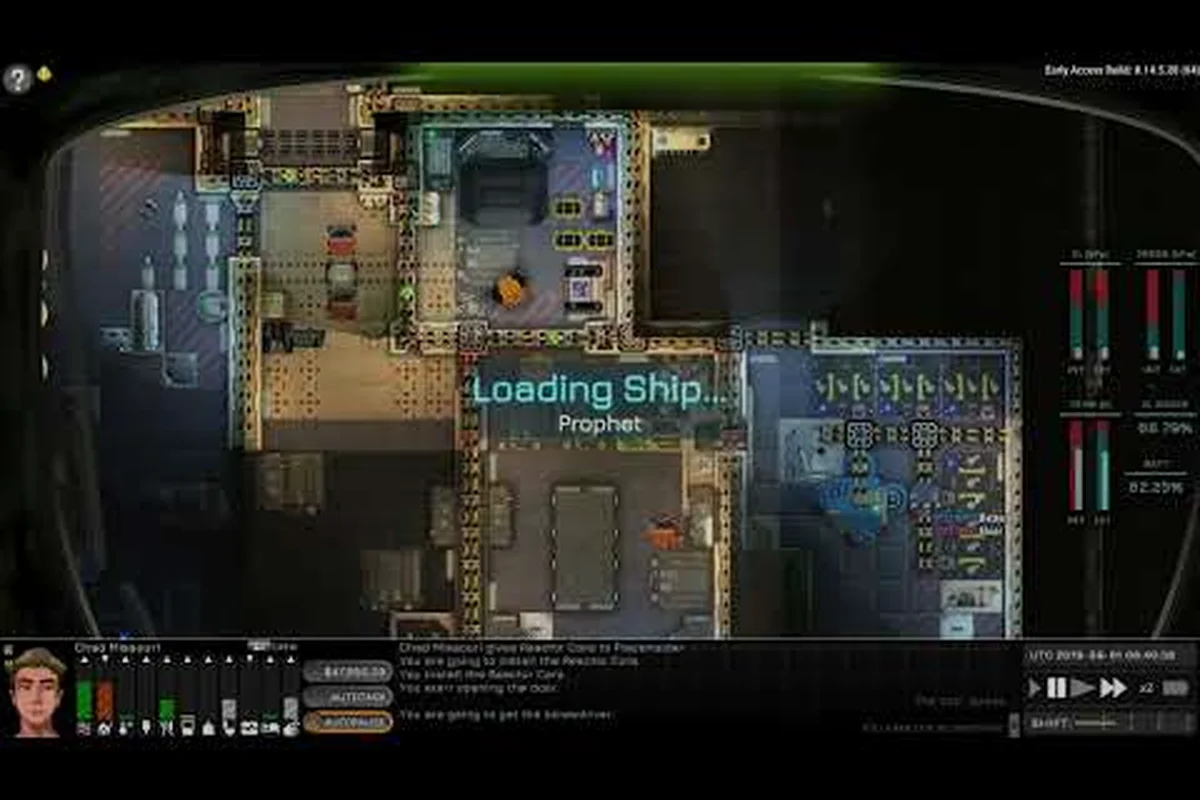
Getting the Ostranauts Miura Hydra RCS intake installed correctly is the difference between a ship that pirouettes on a dime and one that drifts helplessly the moment you cut main thrust. This compact propellant intake sits on the Miura-class hull and feeds the reaction control thrusters, so the tolerances, mounting location, and supporting regulators all matter more than the part's catalog blurb suggests.
Understanding the Ostranauts Miura Hydra RCS Intake
The Miura Hydra RCS intake is a mid-tier propellant intake designed for the Miura hull line in Ostranauts. Players who fly anything from a starter K-Leg frame to a mid-range freighter tend to meet it within the first few contracts because it unlocks early in the tech tree and pairs naturally with the stock Hydra RCS thruster set. According to community testing on the official wiki, the intake is rated for continuous RCS operation under standard atmosphere-to-vacuum transitions, which makes it the go-to pick when you swap between docked and free-flight phases without overhauling your entire propellant loop.
Role on the Ship
The intake's job is to pressurize and meter hydrazine-style propellant before it reaches the RCS thrusters. Without it, the thrusters pulse unevenly and your hull ends up rotating when you wanted a clean translation burn. Three subsystems depend on a healthy intake:
- Translational RCS for lateral and vertical moves around station traffic
- Rotational RCS for yaw, pitch, and roll corrections during dock approach
- Dock-assist manifolds that bleed propellant during precision berthing
The intake sits upstream of all three, so a fouled or misinstalled unit shows up as sluggish attitude control long before it shows up as a hard fault. Crews still learning the ropes can lean on the getting started walkthrough to see how those subsystems interact during a normal shift before they touch the hardpoints themselves.
Technical Specifications and RCS Function
Community-reported numbers for the Ostranauts Miura Hydra RCS intake cluster around the values below, though they may shift slightly with future patches. Treat the table as a planning baseline rather than a contract spec sheet, and always cross-check the live part data before buying.
Core Spec Snapshot
| Parameter | Value | Notes |
|---|---|---|
| Part class | RCS intake | Mid-tier drop |
| Compatible hull | Miura-class | Direct-mount only |
| Compatible thruster | Hydra RCS family | Required pairing |
| Propellant feed | Pressurized liquid | Dual-stage regulator |
| Mass | ~12 kg | Per community data |
| Failure rate baseline | Low | Climbs with age |
| Service interval | ~120 in-game days | According to player reports |
The intake feeds directly into the RCS manifold and is gated by an internal regulator. If you're planning a wider overhaul, the Ostranauts RCS intake regulator article explains how to balance the upstream pressure so the Hydra does not starve your thrusters during a long burn.
How the Intake Talks to the Thrusters
The intake itself does not produce thrust. It conditions propellant and routes it to whatever RCS cluster is mounted downstream. On a stock Miura that means a pair of translational pods plus a rotational cluster at the tail. When propellant arrives at the correct pressure, the RCS thrusters fire in tight bursts and the pilot feels the ship respond crisply. If the intake under-performs — usually because the regulator is mismatched — the response feels mushy and you overshoot dock approaches, which is the cue crews describe when troubleshooting a sluggish attitude control system.
Installation and Mounting Requirements
You cannot just slap the Miura Hydra RCS intake on any hardpoint. It expects a specific hull zone and a clean power tap. The good news is the install is forgiving enough that a two-person crew can knock it out in one shift as long as the right steps are followed in the right order.
Mounting Zones on the Miura Hull
| Zone | Compatible | Notes |
|---|---|---|
| Forward dorsal | Yes | Best for translational feed |
| Aft ventral | Yes | Pairs with stock RCS cluster |
| Mid hull port | Limited | Requires extension manifold |
| Mid hull starboard | Limited | Requires extension manifold |
| External cargo bay | No | Outside rated envelope |
The forward-dorsal and aft-ventral mounts are the two factory positions. Anything else requires a manifold extension that adds mass and another potential leak point. New players handling their first fitting should walk through the install sequence below before they open the hull panels.
Install Steps
- Power down the RCS bus at the breaker panel to avoid a propellant spray on first contact.
- Vent residual pressure through the manual bleed valve behind the thruster cowling.
- Unbolt the blanking plate covering the intake hardpoint; keep the bolts for re-use because spares are not always in stock.
- Seat the Ostranauts Miura Hydra RCS intake against the mount, lining up the propellant feed port first.
- Torque the four corner bolts to the rated spec, because under-torquing leads to micro-leaks under vibration that take days to surface.
- Re-pressurize slowly and watch the regulator gauge for any pressure drift above 3% from the baseline.
- Run a test burn with rotational RCS only, and if response feels sluggish re-check the regulator upstream before signing off.
A skipped bleed step is the single most common cause of an install that looks fine but fails the first EVA maneuver, and crews that rush it end up chasing phantom leaks for half a shift.
Comparing the Hydra Intake to Alternatives
Not every ship needs the Hydra. The table below compares the Ostranauts Miura Hydra RCS intake to two of the most common alternatives players consider when fitting out a non-Miura hull or a budget starter build.
| Feature | Miura Hydra RCS Intake | K-Leg Stock RCS Intake | Vector-9 RCS Intake |
|---|---|---|---|
| Hull compatibility | Miura-class only | K-Leg and Miura | Universal mount |
| Tier | Mid | Starter | Mid-high |
| Regulator requirement | Hydra RCS family | Universal | Vector-9 RCS family |
| Peak feed rate | High | Moderate | High |
| Mass | ~12 kg | ~9 kg | ~14 kg |
| Skill to install | Intermediate | Beginner | Intermediate |
| Avg. market price | Moderate | Cheap | Expensive |
The K-Leg stock intake is fine for the tutorial and your first few contracts, but it struggles under sustained burn because the feed ceiling is lower. The Vector-9 is the upgrade path for crews chasing peak maneuverability, although the regulator coupling adds complexity that beginner crews tend to mis-manage. The Hydra sits in the sweet spot for most players who fly Miura hulls and want a part that just works without constant babysitting.
When to Skip the Hydra
A few scenarios call for a different choice:
- Universal-hull builds: pick the Vector-9 if your fleet mixes K-Leg and Miura frames, because the Hydra's hardpoint limit will force a rebuild later.
- Budget runs: the K-Leg stock intake keeps early-contract cash flow healthy and saves credits for thrusters instead of intakes.
- High-G maneuvering: pair the Vector-9 with reinforced thrusters instead of the stock Hydra RCS thruster set, because the propellant demand outstrips the Hydra intake's ceiling under heavy load.
For a broader look at the RCS side of the build, the RCS thrusters types overview covers how each thruster family changes the intake math and why some pairings feel noticeably tighter than others.
Best Practices and Troubleshooting
A correct install is half the battle. Keeping the Ostranauts Miura Hydra RCS intake healthy across dozens of contracts is the other half. The tips below come from crew logs and Discord threads rather than an in-game manual, so treat them as field-tested advice and adapt them to your own role and shift length.
Preventive Care
- Log service intervals for each intake and replace seals at every second overhaul, because seals fail before the metal housing does.
- Inspect upstream regulators whenever response degrades, since most "intake failures" are actually regulator drift masquerading as a feed problem.
- Match propellant batch quality when refueling; mixing batches can leave residue that fouls the feed port over several cycles.
- Avoid full-throttle dock approaches that slam the intake with rapid pressure spikes, because that is when micro-leaks reveal themselves.
Common Symptoms and Likely Causes
| Symptom | Likely cause | First fix |
|---|---|---|
| Sluggish rotation | Regulator under-pressure | Adjust upstream regulator |
| Pulsed thrust | Air in feed line | Bleed and re-pressurize |
| Propellant smell in cabin | Micro-leak at mount | Re-torque corner bolts |
| Hard fault during EVA | Aged seals | Replace intake seals |
| Random thrust dropouts | Loose feed connector | Re-seat intake on hardpoint |
Symptom-to-cause mapping like this is the fastest way to triage in the middle of a shift, and crews that learn it save hours per contract because they stop swapping parts that were never the problem in the first place.
Tuning for Specific Roles
Different roles on the ship stress the RCS intake in different ways, and the right tuning depends on what you actually do most shifts:
- Long-haul freighters want consistent, low-pulse feed for docking at busy stations, so prioritize seal health over peak feed rate.
- Salvage tugs benefit from a slightly higher feed ceiling because they yank loads around constantly, which means earlier regulator inspections.
- Passenger shuttles prioritize smooth response over peak power, so a clean regulator pairing matters more than raw feed rate numbers.
If a crew is still figuring out which role their ship should specialize in, the install above is forgiving enough that a swap to a different intake later is rarely wasted work, especially when the hardpoint choice was one of the two factory positions.
Frequently Asked Questions
Is the Ostranauts Miura Hydra RCS intake a starter part or a mid-game upgrade?
It is widely treated as a mid-tier upgrade that slots in after the K-Leg stock intake but before high-end universal parts like the Vector-9. Most crews fit it within the first ten contracts because the Miura hull becomes common around that point and the regulator pairing is straightforward.
Can I install the Miura Hydra RCS intake on a non-Miura hull?
Not directly. The hardpoints are Miura-specific. To use it on a K-Leg or other frame you need an adapter manifold that adds mass and a small feed delay, which defeats the part's main advantage and is generally not worth the trade-off according to community testing.
How often should I service the Ostranauts Miura Hydra RCS intake?
Community testing suggests a full seal replacement every 240 in-game days, with a visual inspection at every refuel stop. Skipping inspections is the most common cause of mid-contract failures reported by players, and the cost of a seal kit is trivial compared to a tow-in.
Does the intake work without a matched Hydra RCS regulator?
Technically yes, but the response quality drops noticeably. The intake expects the Hydra RCS family regulator to deliver propellant within a narrow pressure window, and a mismatched regulator tends to underfeed or starve the thrusters during sustained burns, which shows up as mushy dock approaches.
What market price should I expect to pay for a fresh Ostranauts Miura Hydra RCS intake?
Prices fluctuate with the station economy, but players report a typical range that puts it well below the Vector-9 and noticeably above the K-Leg stock intake. Buying from industrial-tier stations rather than frontier outposts tends to land you on the better end of that range and also gives you a more reliable seal warranty.
Got a setup that pairs the Hydra with an unusual thruster family, or a troubleshooting tip that saved your shift last week? Drop it in the comments so other crews can learn from your logs before they book their next contract.