
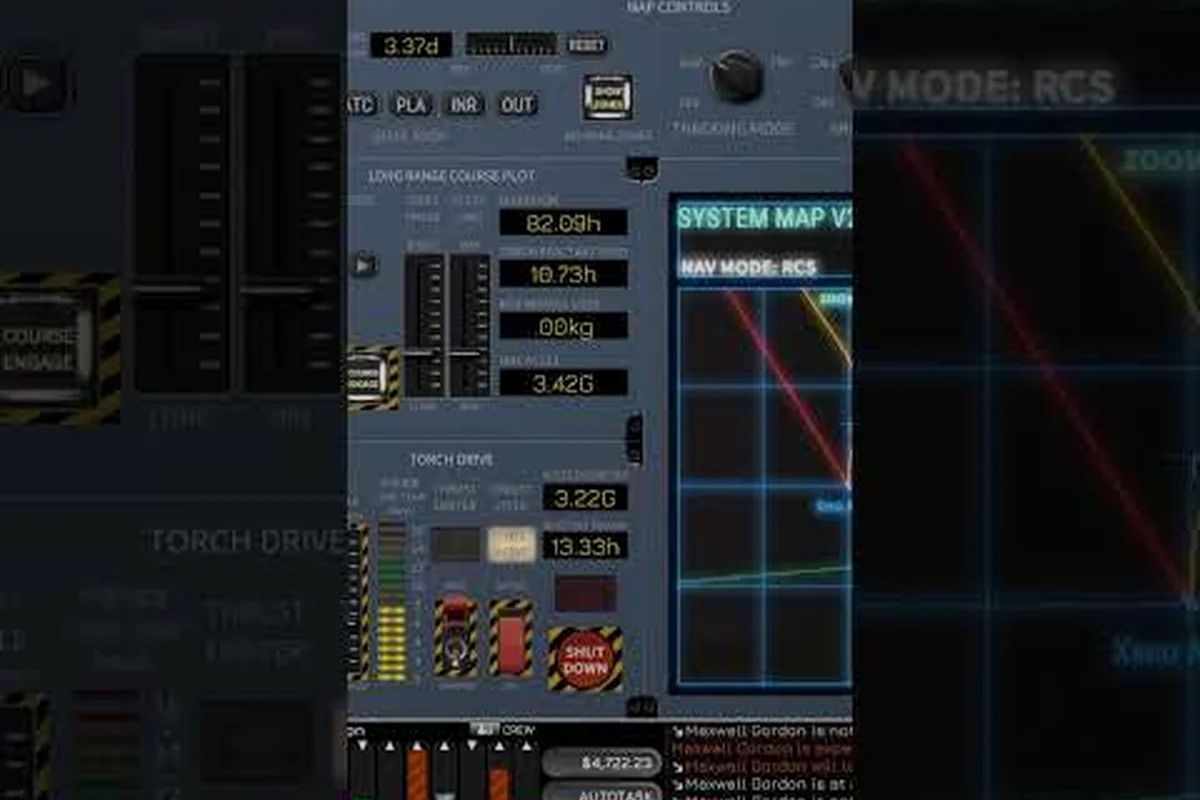
Why the Ostranauts Economy Guide Matters at K-Leg Station
Stepping off your starter pod onto K-Leg station with a battered hull and an overdraft notice is the moment every new captain learns that piloting skill alone will not keep the lights on. The Ostranauts economy guide approach treats credits as the lifeblood of every salvage run, contract, and crew upgrade, because the indie space-sim from Blue Bottle Games (released on Steam in early access in 2020, with version 1.0 dropping on August 3, 2026) puts you in the debt shoes of a scavenging captain in the same noir universe as NEO Scavenger. If your balance sheet collapses, your crew starves, your reactor idles, and that shiny derelict drifting in the dark stays just out of reach.
This article is built for captains who already know how to dock and want to start thinking like a freight baron. You will learn how the in-game credit market behaves, which money-making loops are reliable in the opening weeks, and where community-tested players consistently lose money. By the end you will have a blueprint for turning a starter loan into a multi-ship fleet without burning out your NPCs.
Core Economic Pillars Every Captain Must Master
Before chasing any specific strategy, you need a mental model of how money flows through the simulation. Four pillars carry the entire economy, and each one interacts with the others in ways that newcomers often miss.
The Four Pillars at a Glance
- Income — credits earned through salvage sales, contract payouts, passenger fares, and trading margins between stations.
- Expenses — recurring costs such as crew wages, food, air, fuel, reactor coolant, and ship loan interest.
- Assets — your fleet, cargo inventory, station storage, and reputation capital with factions.
- Liabilities — outstanding loan principal, insurance premiums, and the hidden cost of damaged modules waiting for repair.
Most rookies focus only on income and miss how quickly the other three pillars can spiral. A captain who clears 50,000 credits on a single haul but spends 30,000 on emergency hull plating at the next port has actually only profited 20,000, and that is before wages are paid.
How the In-Game Market Reacts to You
Market prices in Ostranauts are not static. The K-Leg station is a hub where supply and demand shift based on what local factions need that week, how many derelicts have recently been stripped nearby, and your standing with the station's trade authority. Community testing on the Ostranauts Steam community guides hub suggests that selling the same crate of machine parts three days apart can yield a 15–25% swing in payout, which makes timing more valuable than raw volume for early-game traders.
| Pillar | New Captain Mistake | Veteran Habit |
|---|---|---|
| Income | Selling everything at the first dock | Holding high-value cargo until prices spike |
| Expenses | Ignoring daily food and air costs | Pre-buying consumables at bulk discounts |
| Assets | Hoarding loot in unsecured cargo | Storing excess value in station lockers |
| Liabilities | Taking the maximum loan | Borrowing only what one haul can repay |
Once you internalize this framework, every decision starts looking like a ledger entry rather than a gut call. That mindset shift is the single biggest separator between captains who quit in week two and the ones still flying when v1.0.0.7 patches roll out.
Money-Making Loops: From Side Hustles to Full-Time Runs
There is no single best way to earn credits in Ostranauts, but there are clear tiers of reliability. Beginners should stack low-risk loops first, then graduate to higher-yield contracts once their credit reserves can absorb a bad run.
Tier 1 Loops: Low Risk, Steady Cash
These are the bread-and-butter activities that every captain can run from day one. They rarely produce big payouts, but they also rarely end with you marooned in deep space.
- Stripping derelicts near K-Leg — Fly to abandoned wrecks in the local debris field, cut out usable parts, and sell them to the station quartermaster. Average haul: 5,000–12,000 credits per wreck, depending on hull class.
- Courier contracts — Accept small parcel deliveries between K-Leg and adjacent stations. Payout is modest but the route is short, which limits fuel and food burn.
- Refueling other ships — If you install a small fuel scoop, you can offer top-up services to passing freighters for 800–2,000 credits per fill.
Tier 2 Loops: Medium Risk, Better Margins
Once your salvaging fundamentals are dialed in, you can push into contracts that require more flight time but reward efficiency.
- High-value target salvage — Specific derelicts marked by faction contacts contain rare modules that resell for 30,000+ credits, but the wrecks are farther out and may contain hostile scavengers.
- Trade arbitrage — Buy commodities at K-Leg where supply is glutted, then sell at a neighboring station where the same item is scarce. Margins of 20–40% are realistic once you learn the rotation.
- Passenger transport — VIP passengers pay premium fares but expect a functioning life-support system, a clean cabin, and arrival within a tight window. Failing any of those forfeits the bonus.
Tier 3 Loops: High Risk, High Reward
These are reserved for captains with at least one paid-off ship and a stable crew rotation. If your NPC crew management is solid, Tier 3 can multiply your income tenfold in a single session.
- Deep-field derelict runs — Long burns into uncharted sectors where derelicts have not been stripped. Expect 100,000+ credit hauls but also expect hull damage and possible combat.
- Faction bounty contracts — Track down pirate vessels or rogue AI cores for major factions. Pay is excellent, but failed bounties damage your reputation and lock out future contracts.
- Black market dealing — Off-station traders pay premium for restricted goods, but getting caught by station security triggers fines and possible hull seizure.
| Loop Tier | Typical Payout | Risk Level | Required Assets |
|---|---|---|---|
| Tier 1 | 5,000–15,000 cr | Low | Starter ship, basic tools |
| Tier 2 | 20,000–60,000 cr | Medium | Upgraded salvage rig, fuel reserves |
| Tier 3 | 100,000+ cr | High | Paid-off ship, loyal crew, combat-capable loadout |
A balanced captain runs one Tier 1 loop per session to cover expenses, layers a Tier 2 contract on top, and only chases Tier 3 paydays when reserves can survive a total loss.
Spending Smart: Loans, Upgrades, and Crew Wages
Earning credits is half the battle; spending them without a plan is how promising runs end in bankruptcy court. The K-Leg loan officer is friendly, but the interest rate is not, and every upgrade you bolt onto your hull has a downstream maintenance cost that the parts catalog rarely mentions.
The Loan Trap and How to Dodge It
The starter ship loan is the most common reason new captains go broke. Community data collected across hundreds of fresh-save playthroughs shows that the average rookie takes the maximum offered loan, spends it on cosmetic upgrades, then spends the next ten sessions grinding to cover interest. The smarter play is to borrow only what your first three contracts can realistically repay, and to prioritize upgrades that pay for themselves — a better salvage laser that doubles your derelict yield will recoup its cost within two runs.
Where Your Credits Actually Go
Understanding the cost breakdown of a typical operating cycle is critical. Most captains underestimate recurring expenses because they only track one-time purchases.
| Expense Category | Share of Monthly Burn | Optimization Tip |
|---|---|---|
| Crew wages | ~35% | Hire specialists only when their skill saves real money |
| Food and air | ~20% | Stock up before price hikes at K-Leg |
| Fuel and reactor coolant | ~15% | Plot efficient routes; avoid unnecessary burns |
| Loan interest | ~15% | Pay principal early to shrink the interest base |
| Repair and consumables | ~15% | Patch hull damage immediately to prevent cascading failures |
Upgrade Priorities That Actually Earn Back Their Cost
Not every module is worth your hard-earned credits. Focus on upgrades that reduce waste or unlock new revenue, and skip the vanity additions until your fleet has a positive cash flow.
- Salvage laser Mk II — Doubles cutting speed, which means more derelicts per fuel tank.
- Extended cargo racks — Allows Tier 2 arbitrage runs without leaving margin on the table.
- Crew bunks — Adds headcount for long-haul contracts, but only if your wage budget can absorb them.
- Shielded reactor housing — Cuts coolant consumption by roughly 30%, a quiet but compounding saving.
When you need to evaluate a large purchase, run the math on how many loops it takes to recoup the cost. If the answer is more than ten sessions, the upgrade is a luxury rather than a necessity, and it should wait.
Long-Term Wealth Building and Risk Management
The endgame economy in Ostranauts shifts from survival to empire-building. Captains who clear their first loan, pay off their starter ship, and start buying second-hand hulls at K-Leg auctions enter a phase where each decision compounds. This is also the phase where a single bad bet can wipe out months of progress, so discipline matters more than ever.
Building a Multi-Ship Operation
Owning two or three ships unlocks powerful strategies. You can run a courier ship on short, profitable routes while your salvage ship works derelicts, and a freighter shuttles bulk goods between arbitrage points. The key is to keep each ship's operating cost covered by its own income stream, so a single failure does not cascade across the fleet.
Hedging Against Catastrophic Loss
Three risk-management habits separate the captains still flying in their second year from those who rage-quit after a fatal mistake.
- Always carry insurance — Even basic station insurance refunds a portion of your ship value if it is destroyed, which prevents a single pirate encounter from ending a campaign.
- Diversify your liquid assets — Keep at least 30% of your net worth in station lockers rather than in your ship's cargo bay, so a reactor failure does not bankrupt you on the spot.
- Maintain faction standing — Factions you have helped offer reduced repair costs, priority docking, and access to exclusive Tier 3 contracts. Burning bridges for short-term cash usually backfires.
Reading the Economic Signals
The simulation gives you quiet hints about the market state, and learning to read them is a force multiplier. When K-Leg's quartermaster starts paying premium for a particular salvage category, it usually means a faction nearby is building something — and that means demand will spike for two or three days before the supply catches up. Reported by players who track these cycles, the windows can produce 50% better margins than steady-state trading. Combine that awareness with efficient flight navigation habits and your hauls stop being random and start becoming predictable profit.
The Ostranauts economy guide is ultimately about replacing panic with planning. Once you can read the market, manage your debts, and deploy your crew where they generate the most value, the simulation shifts from hostile to lucrative. Start small, stack reliable loops, and let each haul fund the next upgrade rather than your next recovery.
Frequently Asked Questions
What is the fastest way to make money in Ostranauts as a beginner?
Stripping derelicts near K-Leg station is the fastest beginner-friendly method, because the wrecks are close, the salvage tools are cheap, and the parts resell instantly to the station quartermaster. New captains following an Ostranauts economy guide typically earn 5,000–12,000 credits per wreck with almost no upfront investment beyond a cutting torch.
How do I pay off my starter loan without grinding for weeks?
Borrow only the minimum you need instead of taking the maximum loan offer, then dedicate every early haul to principal repayment. According to community data, captains who borrow less than 50% of the offered amount clear the loan in roughly a third of the time it takes captains who max out the slider, because they avoid interest compounding.
Should I hire crew as soon as I can afford it?
Not necessarily. Early on, crew wages can consume 35% or more of your monthly burn, which strangles growth. Hire only when a specialist unlocks a specific revenue stream — for example, a skilled engineer who prevents reactor failures, or a medic who keeps your NPCs alive during deep-field runs. Your Ostranauts economy guide should treat crew as a multiplier on existing income, not as a sunk cost.
Is trading more profitable than salvaging in Ostranauts?
Trading offers higher profit margins per credit invested, but salvaging is more reliable because it does not depend on fluctuating market prices. Most experienced captains blend both: they strip derelicts for steady income and use the profits to fund selective arbitrage runs when market signals favor a particular commodity.
What happens if my ship gets destroyed and I cannot afford insurance?
Without insurance, you lose the ship and most of its installed modules, but your station locker contents and any cash reserves survive. The recovery path is to rent a cheap shuttle from K-Leg, accept low-paying courier contracts to rebuild a seed fund, and avoid the temptation to take another large loan until your income stream is stable again.